

The Shoe Is the Decision
You can have the most beautifully cut wide-leg dress pants in your closet and still walk out looking like you're wearing a costume. Nine times out of ten, the culprit isn't the pants — it's the shoe. Wide-leg trousers are proportion-dependent in a way that slim cuts simply aren't. Get the footwear right and the whole outfit clicks into place. Get it wrong and the leg swallows itself, or worse, the shoe disappears entirely under all that fabric.
This isn't about rules for the sake of rules. It's about understanding why certain shoes work so you can make the call yourself, every time, without second-guessing.
First: Know Your Cut
Not all wide-leg dress pants are the same, and that distinction matters when you're choosing footwear. There are roughly three silhouettes you'll encounter:
- The full palazzo cut — sweeping, floor-grazing, lots of fabric from hip to hem.
- The tailored wide-leg — structured, with a clean break at the ankle or just above it. Think office-appropriate, with sharp creases.
- The cropped wide-leg — hits somewhere between mid-calf and ankle, showing a deliberate gap between hem and shoe.
Each of these has a different relationship with the floor, and that relationship is what determines which shoes work. Keep your specific cut in mind as you read through the options below.
Heels: The Most Reliable Option — When Used Correctly
A heel is the classic pairing for wide-leg dress pants because it does two things at once: it lifts your hem line so the fabric doesn't drag, and it adds vertical momentum to an otherwise horizontal silhouette. But the type of heel matters.
Pointed-toe heels and kitten heels are ideal for the tailored wide-leg cut. The pointed toe peeks out from under the hem, giving the eye something to follow — a visual anchor that stops the leg from looking shapeless. A kitten heel in particular keeps things elongated without tipping into formal territory.
Block heels work well with cropped wide-leg trousers, where the heel is fully visible anyway. The chunkier base balances the volume of the trouser leg rather than fighting it.
What doesn't work: a very high, very thin stiletto under a palazzo-length pant. The heel disappears and the pant hem drags. If your trousers are floor-length, either get them tailored to the exact height of your heel, or choose a different shoe category entirely.
Loafers: The Underrated Workhorse
Loafers have become the go-to pairing for wide-leg trousers in recent years, and for good reason — they're flat, they're structured, and they carry enough visual weight to hold their own against a wide hem.
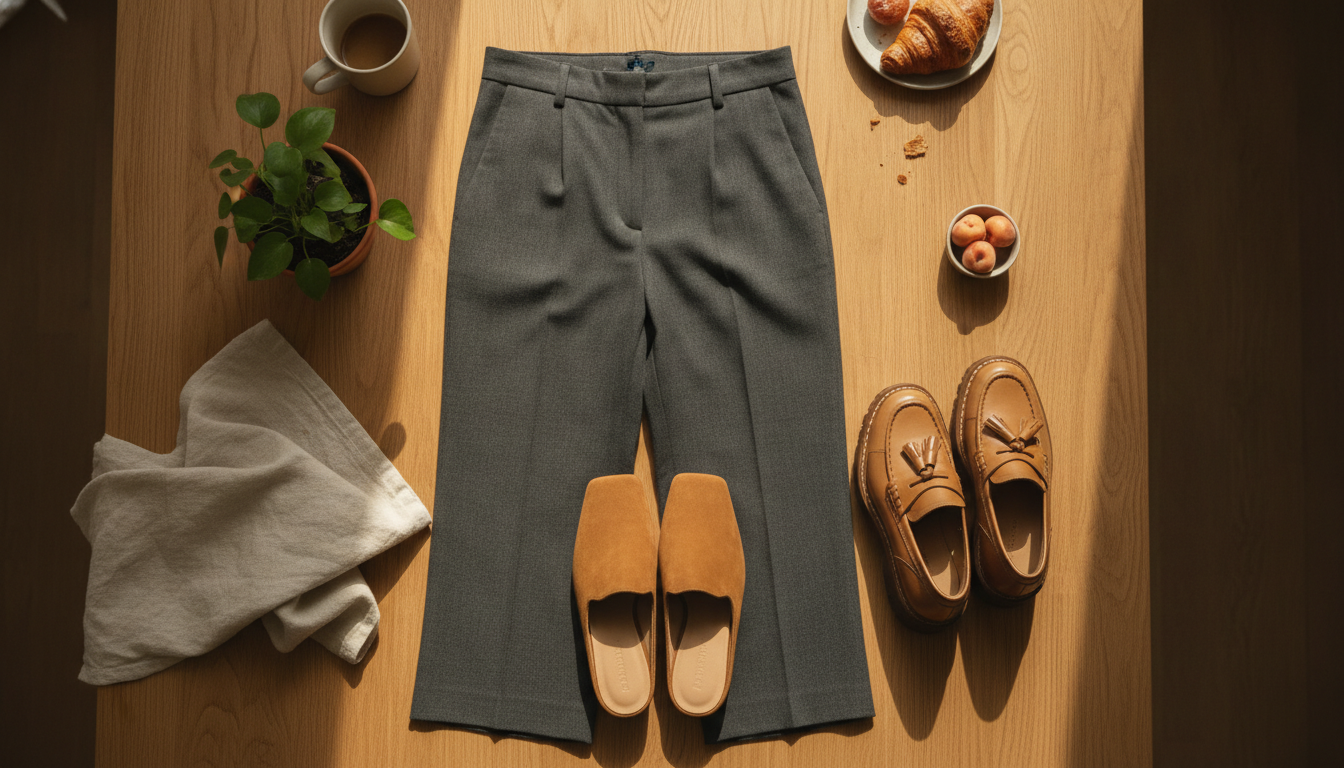
The key is the toe shape and the trouser length. Chunky-soled loafers (the kind with a platform or a thick lug sole) are the strongest choice here. The added height means your hem doesn't completely swallow the shoe, and the bulk of the sole balances the volume of the trouser. Pair these with a tailored or cropped wide-leg and you're in good shape.
Slim, classic loafers — the kind with a thin leather sole — can disappear under a full palazzo cut. If you love that cleaner loafer, pair it with a cropped wide-leg so the shoe is properly visible.
One styling note: when wearing loafers with wide-leg dress pants, skip the sock or go with a low-cut no-show. A visible athletic sock breaks the line and reads as accidental rather than intentional.
Mules: Best for the Cropped Cut
Mules work beautifully with wide-leg trousers — but almost exclusively with the cropped silhouette. The reason is simple: a mule has an open back, which creates a visual gap. When that gap is hidden under a long hem, you lose the elegance of the shoe entirely and the outfit looks unfinished.
With a cropped wide-leg that hits at mid-calf or just above the ankle, a mule is excellent. The exposed ankle and the open-back shoe work together to keep the look light and deliberate. A square-toe mule in a neutral leather or suede is particularly strong — it has enough structure to complement the tailored quality of dress pants without looking overdressed.
Heeled mules follow the same logic as heels generally: the lift helps, but only if the hem length is calibrated to show the shoe.
Sneakers: Yes, But Only One Kind
Sneakers with wide-leg dress pants can look genuinely sharp — but the margin for error is narrow. The sneakers that work are low-profile, clean, minimal silhouettes: think a simple leather sneaker or a classic canvas low-top in white or a neutral tone. The shoe needs to be sleek enough that it reads as a deliberate contrast to the dressier trouser, not as an oversight.
What doesn't work: chunky dad sneakers or running shoes with heavy colorblocking. The combination of wide trouser volume and a bulky shoe creates a bottom-heavy look that no amount of tucking or layering will fix. Save those sneakers for your jeans.
Sneakers pair best with the cropped wide-leg, where the shoe is fully visible and the intentionality of the pairing is clear. Under a full-length palazzo, even a clean sneaker tends to get lost.
The One Shoe to Avoid Across the Board
Ankle boots — specifically, ankle boots with a shaft that cuts across the widest part of the calf. Under wide-leg trousers, this creates an awkward horizontal line that visually shortens the leg and interrupts the flow of the fabric. The wider the trouser, the more pronounced the problem.
If you love ankle boots, wear them with straight-leg or slim trousers. For wide-leg, reach for something that either peeks out cleanly from under the hem (a pointed heel, a loafer) or is fully visible by design (mule, sneaker, with a cropped cut).
A Quick Reference
- Palazzo / floor-length: Pointed-toe heels, kitten heels — calibrated to hem length. Tailored loafers with a visible toe.
- Tailored wide-leg: Block heels, pointed heels, chunky-soled loafers, classic loafers.
- Cropped wide-leg: Almost anything works — mules, loafers, clean sneakers, block heels. This is your most versatile cut.
If you're still working out which trouser silhouette suits you best, our guide on styling wide-leg and straight-leg trousers intentionally is worth a read before you shop.
The right shoe doesn't just complete the outfit — it's what makes the trouser look like a choice rather than an accident. Once you know your cut, the footwear decision gets a lot simpler. Shop wide-leg trousers at Wardrobecrush and build from the hem up.
Frequently Asked Questions
Can you wear flat shoes with wide-leg dress pants?
Yes — but flat shoes work best when the trouser is cropped, so the shoe is visible and the hem isn't dragging on the ground. Chunky-soled loafers and square-toe mules are the strongest flat options because they carry enough visual weight to balance the volume of a wide leg. Very slim, thin-soled flats can disappear under longer cuts.
Do wide-leg dress pants work with sneakers?
They can, but the sneaker needs to be low-profile and clean — a minimal leather or canvas low-top in a neutral color. Chunky or heavily branded athletic sneakers tend to create a bottom-heavy silhouette when paired with wide-leg trousers. Cropped wide-leg pants are the most forgiving cut for this pairing because the shoe stays fully visible.
What heel height works best with wide-leg dress pants?
There's no single right answer — it depends on the length of your trouser. The goal is for your hem to graze the floor or fall just above it, with the toe of the shoe peeking out. A kitten heel or mid heel often hits that balance without tipping into overly formal territory. The most important thing is to try the pants on with the actual heel you plan to wear and check the hem length before committing to the outfit.
Why don't ankle boots work with wide-leg trousers?
Ankle boots have a shaft that cuts across the lower calf, creating a horizontal line that visually interrupts the flow of the trouser fabric and shortens the leg. The wider the trouser, the more noticeable this break becomes. If you want to wear boots, a knee-high or over-the-knee boot tucked under the trouser can work — but ankle boots are generally better paired with slimmer cuts.