

The Leggings-and-Blazer Trap
You've seen the advice a hundred times: throw a blazer over your leggings and call it athleisure. It's not wrong, exactly — but it's also not the whole picture. The blazer trick works when everything else is already doing its job. When it isn't, you still look like someone who grabbed a jacket on the way out of a spin class.
Real athleisure — the kind that reads as intentional rather than accidental — is about a few specific decisions made before you even open your closet door. Fabric. Silhouette proportion. The right accessories in the right weight. Get those three things working together and you don't need a blazer to save the outfit.
Start With Fabric, Not Silhouette
The single biggest tell that an outfit is gym-adjacent rather than street-ready is fabric. Moisture-wicking polyester, shiny spandex blends, and anything with a mesh panel are fabrics that belong to performance wear — and they broadcast that no matter what you pair them with.
Athleisure that works in the real world leans into fabrics that look relaxed but don't read as athletic. Think French terry, heavyweight cotton jersey, ribbed knit, ponte, and brushed fleece. These fabrics have the ease and comfort of activewear without the visual language of a workout. When you're shopping for casual basics, run the fabric question first: does this look like it belongs in a locker room, or on a well-dressed person who values comfort?
A graphic tee in organic cotton — like a well-cut statement tee — sits in a completely different visual register than a fitted performance top, even if both are technically casual. The cotton reads as considered; the performance fabric reads as functional.
The Silhouette Rule That Actually Works
Athleisure silhouettes tend to be fitted on the bottom (leggings, bike shorts) or relaxed everywhere (oversized hoodie, wide-leg joggers). Both can look great. Neither looks great when you double up on the same energy.
The principle is simple: if the bottom is fitted and streamlined, the top needs volume — and vice versa. A fitted legging with an oversized graphic tee tucked loosely at the front. Wide-leg joggers with a fitted ribbed crop. This is the same proportion logic that governs any outfit, but it matters even more in athleisure because the fabrics are already casual — the silhouette is doing the heavy lifting that tailoring usually handles.
If you're wearing something relaxed on both top and bottom (a matching sweatshirt-and-jogger set, for example), the trick is to define your waist somewhere — a crossbody bag worn high, a belt on a jacket, even just tucking one side of the top. Without that anchor, a matching set can slide from effortless into shapeless.
Matching Sets: The Shortcut That Works When You Use It Right
A matching set is genuinely the easiest athleisure move there is. When the top and bottom are clearly designed to go together — same fabric, same color family, same design intent — the outfit looks considered without any effort. Wardrobecrush's matching outfit collections (including coordinated sets for everyday wear) are a good example of this done well: the design work is already done, so you're not trying to force two separate pieces into a conversation.
The catch is that a matching set only earns its keep if the rest of the outfit steps up. Shoes, bag, and outerwear can't be an afterthought when the clothes themselves are doing the talking. More on that in a moment.
The Accessories That Close the Gap
This is where most athleisure outfits either land or fall apart. The wrong accessories don't just look off — they actively pull the whole look back toward the gym.
A few specific swaps that make a real difference:
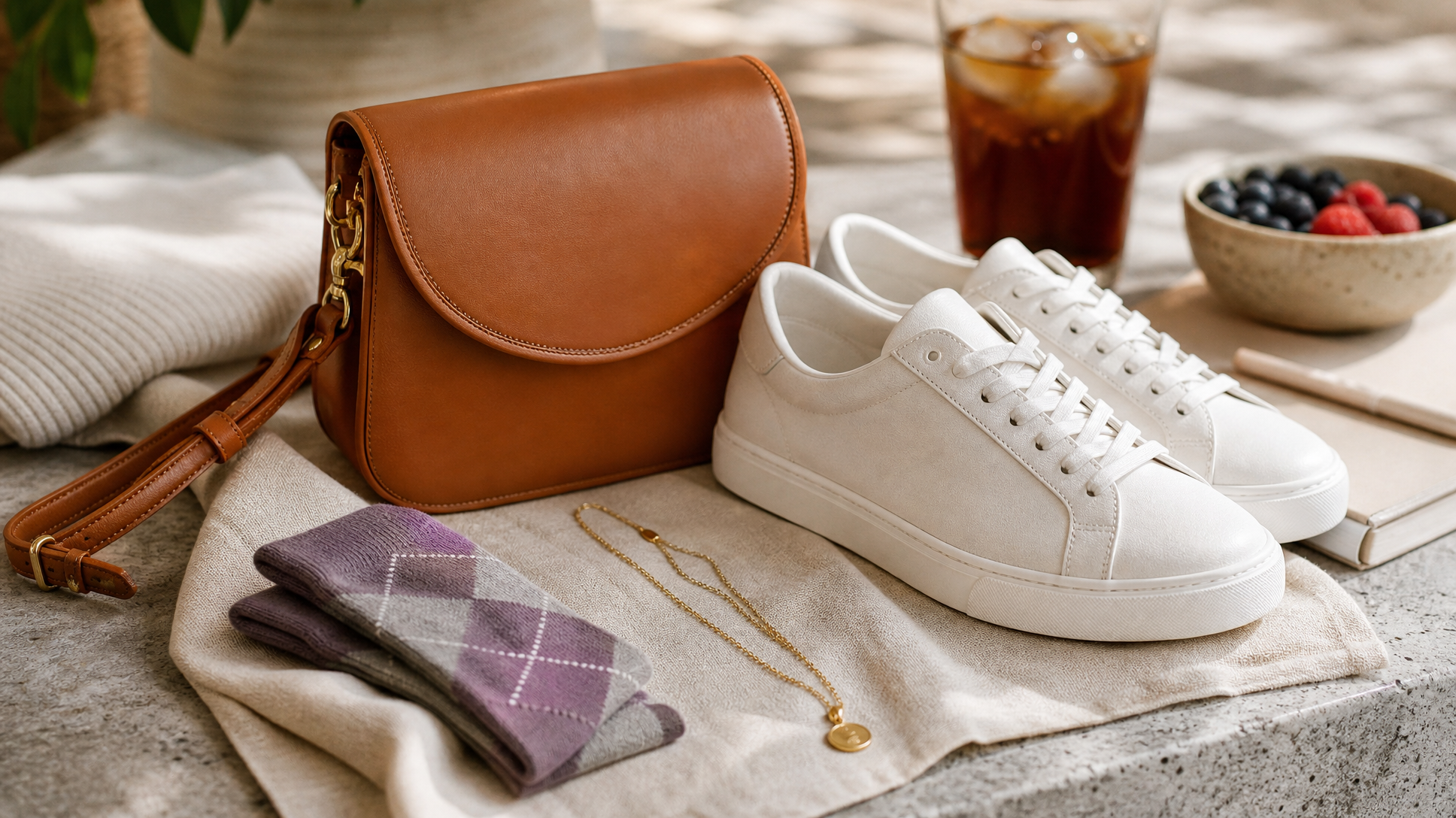
- Bag weight matters more than bag style. A structured mini bag or a leather-look crossbody immediately signals that you're dressed, not just comfortable. A drawstring gym bag or a tote that's clearly a workout bag does the opposite, no matter how nice the rest of the outfit is.
- Socks are a finishing detail, not an afterthought. A visible sock in a considered color or pattern — an argyle, a ribbed crew, something with a little personality — adds a layer of intentionality that bare ankles or plain white athletic socks don't. It sounds small. It isn't.
- Shoes do the heaviest lifting. Chunky dad sneakers, clean low-profile trainers, and slip-on mules all read differently. Chunky sneakers add attitude and work well with sleeker, fitted bottoms. Clean minimalist trainers in white or neutral tones are the most versatile. A slip-on mule or loafer takes an athleisure outfit firmly into off-duty-chic territory. The one shoe category that keeps the outfit gym-adjacent: anything with a lot of visible technical detailing — aggressive grip soles, reflective panels, ankle straps designed for running.
- One piece of jewelry changes the register. You don't need much. A simple gold chain, a set of small hoops, or a single layered bracelet is enough to signal that this is a dressed-down look, not a dressed-up workout.
Outerwear That Doesn't Undo the Work
The blazer gets a lot of credit here, and it earns some of it — but it's not the only option, and it's sometimes the wrong one. A blazer over a matching tracksuit set can feel like a costume. A blazer over a fitted tee and wide-leg joggers works much better, because the proportions are already doing something interesting.
Other outerwear that transitions athleisure into everyday wear without effort: an oversized shirt jacket (also called a shacket) worn open, a tailored longline coat, a denim jacket in a relaxed fit. The common thread is that these pieces have some structure — enough to frame the casualness of the outfit rather than compete with it.
What to avoid: a full zip-up athletic hoodie as outerwear over an otherwise dressed-up athleisure outfit. It reads as layering for warmth, not layering for style.
A Note on Color and Print
Most athleisure defaults to black, grey, and neutral tones — which is fine, but it's also where a lot of outfits start to blur together. A single piece in a considered color or with a graphic that has some personality (a well-designed slogan tee, an interesting print) can be the thing that makes an otherwise simple outfit memorable.
The key is to let that one piece lead. If your tee is making a statement, keep everything else quiet. If your joggers are in a bold color, pull from that palette for your accessories and let the top stay neutral. The same logic applies when you're working with oversized or relaxed pieces — one element leads, the rest support.
Build the Habit, Not Just the Outfit
The goal isn't to have one great athleisure outfit. It's to have a wardrobe where the casual pieces you reach for most often are already doing the work — good fabrics, considered cuts, pieces that play well with each other. That's what makes getting dressed feel easy instead of effortful.
Start by auditing what you already own. Which casual pieces feel intentional when you put them on, and which ones feel like a compromise? The ones that feel like a compromise are usually the ones that only work for the gym — and they're the first to replace.
Browse Wardrobecrush's casualwear collection to find the everyday pieces — graphic tees, coordinated sets, and accessories — that give your athleisure wardrobe something to work with.
Frequently Asked Questions
What's the difference between athleisure and just wearing workout clothes?
Athleisure borrows the comfort and ease of activewear but uses fabrics, silhouettes, and styling choices that don't signal a specific athletic function. Workout clothes are designed for performance — moisture management, range of motion, durability under sweat. Athleisure is designed to look relaxed and feel comfortable in everyday life. The fabrics are usually softer and less technical, the cuts are more considered, and the pieces are styled with accessories and outerwear that have nothing to do with exercise.
Can you wear athleisure to a casual office or work-from-home setting?
For a casual office, the safest athleisure moves are tailored joggers in a ponte or structured fabric, a fitted ribbed top, and clean leather-look footwear — essentially pieces that have the silhouette of casualwear but the finish of something more polished. For work-from-home, almost anything goes as long as you feel put-together enough to jump on a video call. A matching set in a solid, non-athletic color with a simple accessory usually handles both.
Do matching sets actually look good, or do they just look like pajamas?
It depends entirely on the fabric and the styling. A matching set in a technical or overly casual fabric with no accessories and athletic shoes can absolutely read as loungewear. The same silhouette in a heavier cotton or ribbed knit, worn with structured shoes and a proper bag, reads as intentional and stylish. The clothes themselves are often the same — it's the context you build around them that decides which direction they go.
What shoes work best with wide-leg joggers for an athleisure look?
Wide-leg joggers work best with shoes that have some visual weight at the bottom — chunky sneakers, platform trainers, or even a block-heel mule. A very slim, low-profile shoe can disappear under a wide hem and throw the proportions off. If you want a cleaner, more minimal look, a pointed-toe flat or loafer can also work well because the toe shape adds length and cuts through the volume of the trouser. This guide on shoes for wide-leg pants goes deeper into the cut-by-cut logic if you want more detail.