

The Label Doesn't Always Tell the Whole Story
You've stood in a store — or more likely, scrolled through a product page — and seen the word "sustainable" and felt vaguely reassured. Maybe you bought the thing. Maybe you didn't, but you felt like you should have. Either way, you probably walked away without a clear answer to the actual question: what does that word mean here, and who decided it applied?
That gap between the marketing language and the reality is where most shoppers get lost. This post is about closing it — not by making you feel guilty about your wardrobe, but by giving you a clearer lens for what fast fashion and sustainable fashion actually mean in practice, and how your buying habits fit into the picture.
What Fast Fashion Actually Is (Beyond the Obvious)
Fast fashion is a production and retail model built on speed and volume. New styles arrive constantly — sometimes weekly — at price points low enough to feel disposable. The business logic depends on it: if clothes are cheap enough, you'll buy more of them, wear them a handful of times, and replace them when the trend moves on.
The environmental and labor concerns that follow from this model are real and well-documented. But here's the part that often gets glossed over: fast fashion isn't just about price. It's about the relationship between a garment and its intended lifespan. A $15 top designed to survive three washes and a single season is fast fashion. A $15 top made simply because a small brand is keeping costs accessible isn't automatically the same thing.
Price is a signal, not a definition. What matters more is whether the piece was designed to last — in construction, in materials, and in style.
What "Sustainable Fashion" Actually Requires — and What It Doesn't
Here's where it gets complicated. "Sustainable" is not a regulated term in fashion the way, say, "organic" is in food. Any brand can use it. That doesn't mean most brands using it are lying — but it does mean you can't take it at face value without knowing what's behind it.
Genuinely sustainable fashion practices tend to involve some combination of these things:
- Material sourcing — using fabrics that have a lower environmental footprint, whether that's organic cotton, recycled fibers, or natural materials that biodegrade.
- Production conditions — paying fair wages, maintaining safe working conditions, and being transparent about where and how garments are made.
- Longevity by design — making clothes that are constructed well enough to actually last, so they don't end up in landfill after a season.
- Reduced overproduction — making fewer pieces more deliberately rather than flooding the market and discounting the surplus.
A brand might genuinely nail one of these and fall short on others. A brand that uses recycled materials but produces at massive volume and discounts aggressively is doing something — but calling it fully "sustainable" stretches the word. A brand that makes fewer, better-constructed pieces in conventional materials but prices them fairly and designs them to last for years is arguably doing more for your wardrobe's footprint than a brand with a "conscious collection" buried in an otherwise fast-fashion catalog.
The honest answer is that sustainability in fashion exists on a spectrum, and most brands sit somewhere in the middle.
Greenwashing: How to Spot It Without Becoming a Cynic
Greenwashing is when a brand uses environmental language to imply more responsibility than its actual practices reflect. It's worth knowing the common forms it takes — not to distrust every brand that mentions sustainability, but to know what questions to ask.
Vague language without specifics. "Eco-friendly," "green," "conscious" — these mean nothing on their own. Look for specifics: what material, what percentage, what certification, what factory.
A capsule collection used to offset a fast-fashion core. If a brand launches a small "sustainable edit" while the rest of its catalog is unchanged, the collection is more marketing than mission.
Certifications cited without context. Some certifications are rigorous and meaningful; others are industry-self-certifications with minimal requirements. If a brand cites a certification, it's worth a quick search to understand what that certification actually audits.
None of this means you need to become a full-time fashion researcher. It means that when a brand makes a sustainability claim, the right response is a single follow-up question: what specifically does that mean here?
The Part That's Actually in Your Control
Here's the thing most sustainable fashion conversations skip: your buying habits matter as much as which brand you choose.
A piece from a brand with excellent sustainability credentials that you wear twice and donate is less sustainable in practice than a mid-range piece you wear for three years. The most environmentally sound garment is the one that stays in your wardrobe and gets used — regardless of the label it came from.
This is where intentional buying becomes the actual lever. Before adding something to your cart, a few honest questions go a long way:
- Does this work with at least three things I already own?
- Am I buying this because I genuinely need it, or because it's on sale and feels like a good deal right now?
- Is this built well enough to last — or does the construction already feel thin and rushed?
- Will I still want this in two years, or is this purely a trend buy?
Answering these honestly before you buy is more powerful than any label. It's also the foundation of what a capsule wardrobe approach is really about — not minimalism for its own sake, but building a wardrobe where everything earns its place.
How to Actually Shop the Gap
Most people aren't going to shop exclusively from brands that meet every sustainability criterion — and that's fine. The goal isn't purity; it's progress. Here's a practical framework for shopping more intentionally without making it a full-time project.
Buy fewer, better pieces. This is the oldest advice in the book because it works. One well-made shirt you wear forty times does more for your wardrobe — and the planet — than four cheap ones you cycle through in a season. Focus on construction: check seams, feel the fabric weight, look at how the garment is finished inside.
Prioritize versatility. A piece that works across multiple contexts — dressed up, dressed down, across seasons — is inherently more sustainable than a one-occasion item. Accessories are a particularly good place to apply this logic — a well-chosen belt or bag extends the life of everything around it.
Look for brands with a clear design philosophy. Brands that talk specifically about how they design — what they're trying to achieve with each piece, who it's for — tend to produce more considered clothing than brands whose primary message is price or volume. Intentional design is a meaningful signal.
Resist the sale spiral. A discount on something you don't need isn't a saving — it's a spend. Fast fashion thrives on this psychology. Buying something at 70% off that you'll wear twice is still worse for your wardrobe and your wallet than buying something at full price that you'll wear for years.
Care for what you own. Washing clothes in cold water, air drying where possible, and storing things properly extends garment life significantly. This sounds obvious, but it's genuinely one of the highest-impact things you can do — and it costs nothing.
What to Look for When a Brand Makes Quality Claims
Not every brand will have a sustainability manifesto, and that's okay. Quality and longevity are their own form of responsibility — a piece that lasts is a piece that doesn't need replacing. When a brand talks about quality, here's what to look for beyond the marketing copy:
- Fabric composition is listed clearly. Vague descriptions like "premium fabric" without specifying the material are a yellow flag.
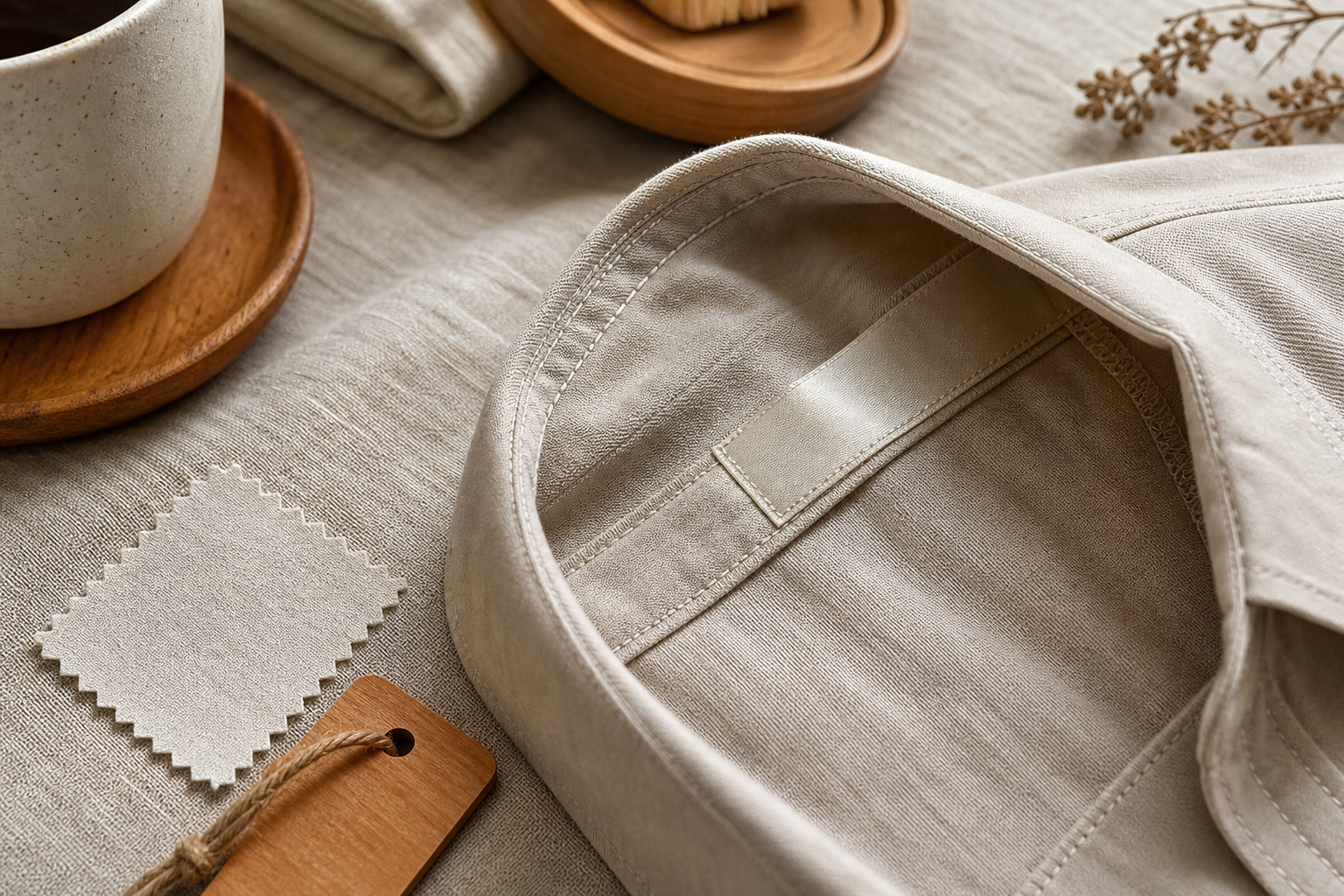
- The construction is visible. Double-stitched seams, reinforced stress points, and clean finishing inside a garment are signs of care at the production stage.
- The fit is intentional. Well-designed clothing fits the body it's made for. Pieces that are clearly designed with a specific silhouette in mind tend to reflect more considered production overall.
- The range is curated, not endless. Brands that sell everything to everyone tend to have less control over quality across their catalog. A more focused, curated range is often a sign that each piece received more attention.
The Bottom Line
Fast fashion and sustainable fashion aren't two clean camps with a clear line between them — they're ends of a spectrum, and most of the fashion industry lives somewhere in the middle. The most useful shift you can make isn't to pick a side; it's to become a more intentional buyer. Ask better questions about what you're buying and why. Choose pieces built to last over pieces built to look good in a photo. And build a wardrobe that you actually use, rather than one that accumulates.
That's the gap worth shopping — and it's one you can close from wherever you're starting.
Wardrobecrush's curated collections are built around that same idea: refined essentials designed to be worn more than once, more than a season. Explore the full range at wardrobecrush.com and find pieces that earn a permanent place in your wardrobe.
Frequently Asked Questions
Is mid-range fashion automatically better than fast fashion?
Not automatically — price is a signal, not a guarantee. A mid-range piece can still be poorly constructed and designed to trend-cycle quickly, while a lower-priced piece from a smaller brand might be made with more care. What matters more than price is construction quality, material transparency, and whether the piece was designed with longevity in mind.
How do I know if a sustainability claim is genuine?
Look for specifics behind the claim: what material, what percentage, what third-party certification, which factory or production standard. Vague language like "eco-conscious" or "green" without supporting detail is a flag. Genuine sustainability claims tend to come with verifiable information — a brand that's doing the work usually wants you to know exactly what that work is.
What's the single most impactful thing I can do to shop more sustainably?
Buy less, and wear what you buy more. The environmental cost of a garment is largely determined by how many times it's worn before it's discarded. A piece worn fifty times has a dramatically lower per-wear footprint than one worn five times, regardless of how it was made. Intentional buying — choosing pieces that genuinely work in your wardrobe and are built to last — is the highest-leverage habit you can build.
Can I build a sustainable wardrobe without spending a lot more money?
Yes — though it often requires a shift in how you think about spending rather than how much you spend. Buying one well-made piece instead of three cheaper ones often costs the same or less over time, especially when you factor in replacement cycles. Starting with versatile basics that work across multiple outfits, caring for what you own properly, and resisting sale-driven impulse purchases all reduce your overall spend while building a more considered wardrobe.